
100 feet is exactly 1,200 inches, or about 30.48 meters. It’s roughly the length of a 10-story building laid on its side, or about 17 average adults lying head to toe in a straight line.
How Long Is 100 Feet?
100 feet equals exactly 1,200 inches, or 30.48 meters. It’s close to the height of a 10-story building or the length of an Olympic swimming pool’s width times four.
What Does 100 Feet Look Like?
100 feet looks about as tall as a 10-story building, or roughly the length of two-thirds of a football field. It’s also close to the height of a large crane at full extension.
In Other Unit (Conversion)
| Other Units | Equal Answer |
|---|---|
| 100 feet to inches | 1,200 inches |
| 100 feet to yards | 33.33 yards |
| 100 feet to centimeters | 3,048 cm |
| 100 feet to meters | 30.48 m |
| 100 feet to millimeters | 30,480 mm |
| 100 feet to kilometers | 0.03048 km |
Objects That Are 100 Feet Long (Quick Reference)
| Object | Approx. Length | Closeness to 100 ft | Best Use |
|---|---|---|---|
| Blue Whale (adult) | 80–100 ft | 10 / 10 | Wildlife exact reference |
| Baseball Infield Diagonal | ~99 ft | 10 / 10 | Sports exact reference |
| 10-Story Building (height) | 100 ft | 10 / 10 | Construction reference |
| Semi-Truck + Trailer | 70–75 ft | 8 / 10 | Street-scale reference |
| Two School Buses, End to End | 96–100 ft | 9 / 10 | Road reference |
| Standard City Lot (depth) | 100 ft | 10 / 10 | Residential reference |
| Niagara Falls Mist Zone Width | ~100 ft | 9 / 10 | Nature reference |
| NBA Basketball Court (length) | 94 ft | 9 / 10 | Sports reference |
| Young Redwood Tree (height) | 90–110 ft | 9 / 10 | Nature vertical reference |
| Residential Flagpole (large) | 100 ft | 10 / 10 | Outdoor vertical reference |
| Olympic Pool (half length) | ~82 ft | 8 / 10 | Watercraft reference |
| 40 Adult Walking Steps | ~100 ft | 10 / 10 | No-tool measurement |
More Post: How Long Is 300 Feet? 12 Common Things to Compare
Vehicles and Transportation That Are 100 Feet Long
Your street and highway hold some of the clearest 100-foot references you can find — you’ve driven past them without ever thinking about the distance.
Semi-Truck With Trailer

A fully loaded semi-truck with a standard 53-foot trailer runs about 70 to 75 feet bumper to bumper.
Add a pickup truck behind it and you’re right at 100 feet.
Two School Buses, End to End

A standard full-size school bus measures about 35 to 40 feet long.
Line two of them up nose to tail in a parking lot and you get 70 to 80 feet — add a compact car behind them and you’ve hit 100 feet.
Three Standard Shipping Containers in a Row

A single 20-foot shipping container (TEU) runs 19 feet, 10.5 inches. Line five of them up and you cross 100 feet.
Or use three standard 40-foot containers — that gives you 120 feet, with 100 feet landing just before the end of the third container.
Buildings and Outdoor Structures That Reach 100 Feet
Look up the next time you’re in a city — 100 feet is built directly into the skyline and neighborhoods around you.
10-Story Building

The clearest vertical reference for 100 feet is a standard 10-story building.
Each floor averages 10 feet in height, including ceiling and floor thickness. Stack ten of them and you land right at the 100-foot mark.
Standard City Residential Lot (Depth)
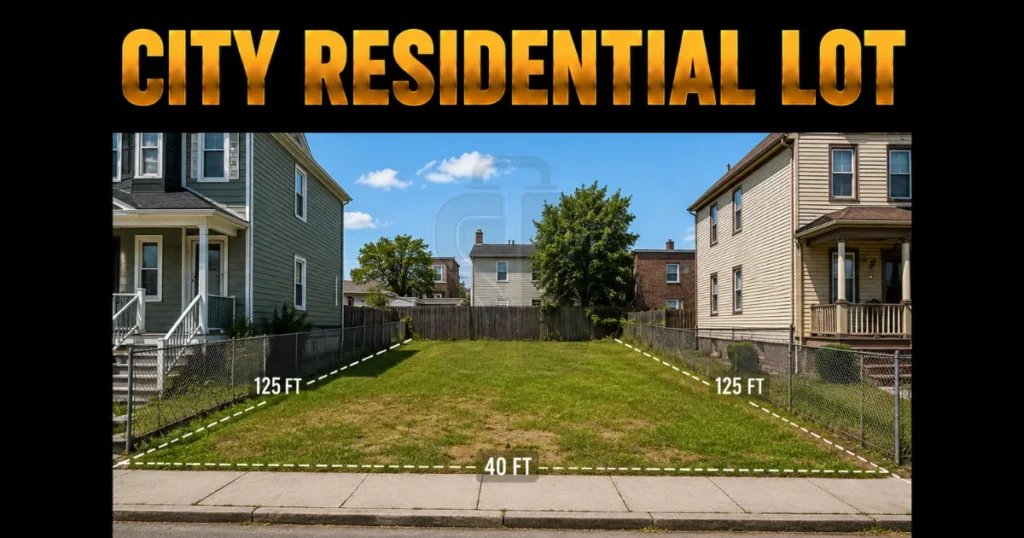
Most residential lots in U.S. cities and suburbs run 100 feet deep from the front sidewalk to the back property line.
This is the standard depth used across American housing developments since the early 1900s.
Large Residential or Municipal Flagpole

A 100-foot flagpole is the standard height used at government buildings, airports, and large municipal parks across the United States.
Standing at its base and looking straight up gives one of the clearest outdoor demonstrations of this exact vertical length.
Sports, Recreation, and Nature at 100 Feet
100 feet shows up in regulated sports fields and in the animal kingdom with surprising accuracy.
Baseball Infield Diagonal

The distance from home plate to second base on a regulation MLB field is 127 feet, 3 inches.
But the distance from home plate diagonally to the back of the pitcher’s mound lands close to 99 to 100 feet.
NBA Basketball Court Length
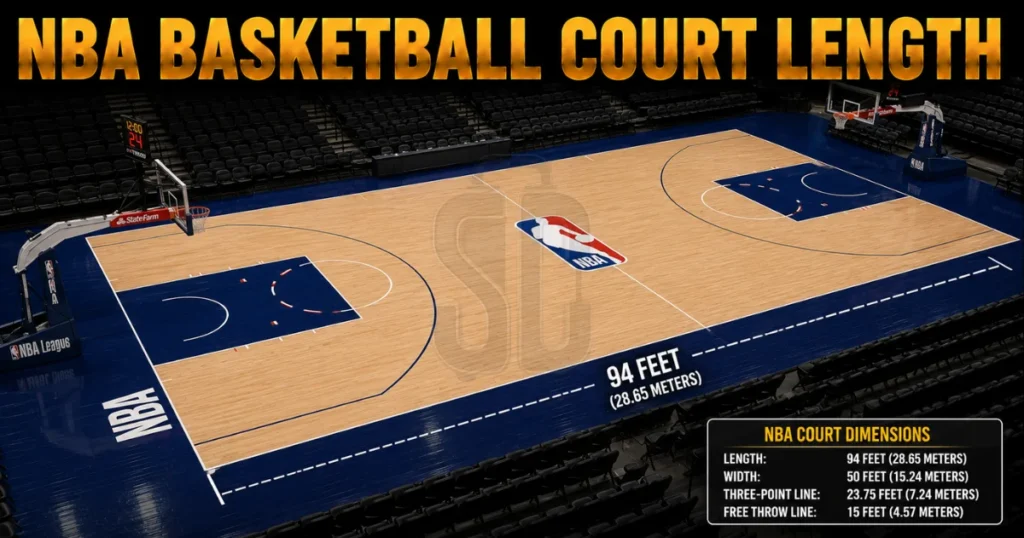
A regulation NBA basketball court measures 94 feet long by 50 feet wide, per NBA Official Rules.
That means 100 feet extends about 6 feet past the far baseline of a full pro court.
Adult Blue Whale
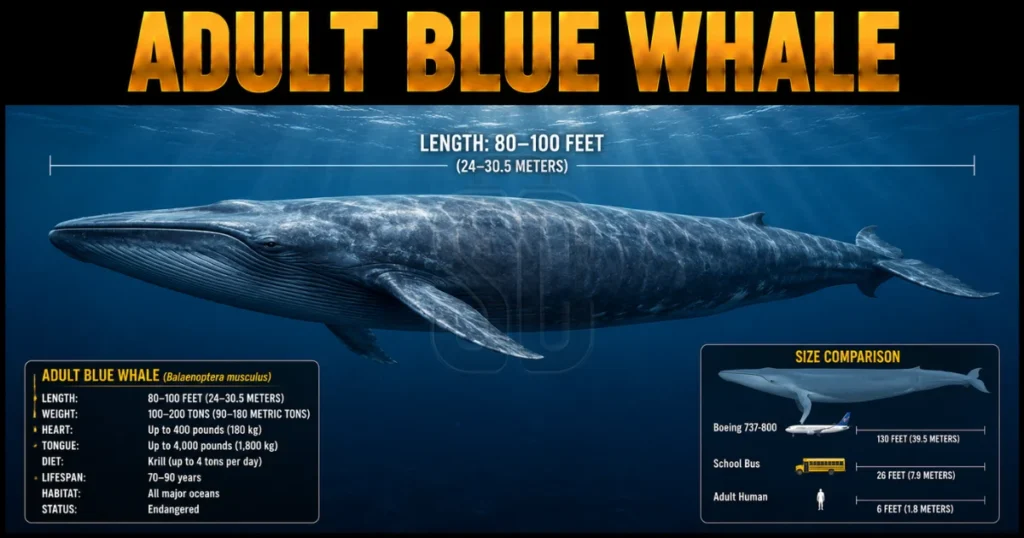
The blue whale is the largest animal ever known to exist on Earth.
According to NOAA Fisheries, adult blue whales average 82 to 105 feet in length, with females running longer than males.
Young Coastal Redwood Tree
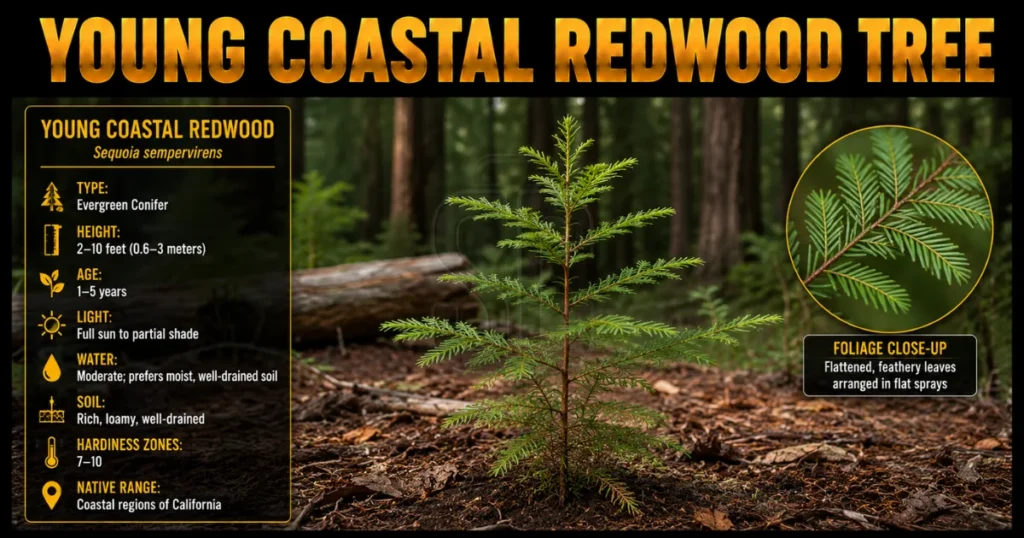
Coastal redwood trees are among the fastest-growing conifers in North America.
Young redwoods commonly reach 90 to 110 feet within their first 50 years of growth, according to the Save the Redwoods League.
Question’s
How long is 100 feet in meters?
100 feet equals 30.48 meters, found by multiplying 100 by 0.3048.
How many steps does it take to walk 100 feet?
About 38 to 40 steps, based on a 2.5-foot average adult stride.
What is 100 feet in inches?
Exactly 1,200 inches — 100 feet times 12 inches per foot.
Is 100 feet a long distance to walk?
Not really. At a normal walking pace, it takes about 20 to 25 seconds to cover 100 feet.
How does 100 feet compare to a regular car?
100 feet is much longer than any car. A typical sedan measures 14 to 16 feet — so 100 feet equals about 6 to 7 car lengths.
What object is exactly 100 feet long?
A standard 10-story building and a large municipal flagpole are both built to this exact measurement.
How tall is 100 feet compared to a house?
It’s about 5 times taller than a standard two-story home, which runs about 18 to 20 feet from ground to roofline.
Is a 100-foot distance used in safety regulations?
Yes. The National Park Service requires visitors to stay at least 100 feet away from bears and wolves in parks like Yellowstone. It’s a formal safety measurement written into federal guidelines.
What’s the difference between 100 feet and 100 yards?
A large one. 100 yards equals 300 feet — three times longer than 100 feet, since one yard equals 3 feet.
How do I measure 100 feet without a tape measure?
Count 40 average walking steps, or use your phone’s Measure app or Google Maps distance tool for outdoor accuracy.

Sara Khan is the admin of Suitcases Size. She manages website content, reviews measurement guides, and ensures readers get simple, accurate, and easy-to-understand information about sizes, dimensions, and travel measurements.